Sludge Scraper and Suction Machine
Types and Features:
- Center-Driven Sludge Scraper/Suction Machine: Designed specifically for circular sedimentation tanks, it uses a central drive unit to rotate the scraper arm, scraping sludge to the central collection pit for discharge. It features seamless scraping, high load-bearing capacity, and no dead angles.
- Peripheral-Driven Sludge Scraper/Suction Machine: Suitable for large-diameter circular sedimentation tanks, it uses peripheral drive wheels to scrape sludge along a track along the tank edge, offering advantages such as low energy consumption and structural stability.
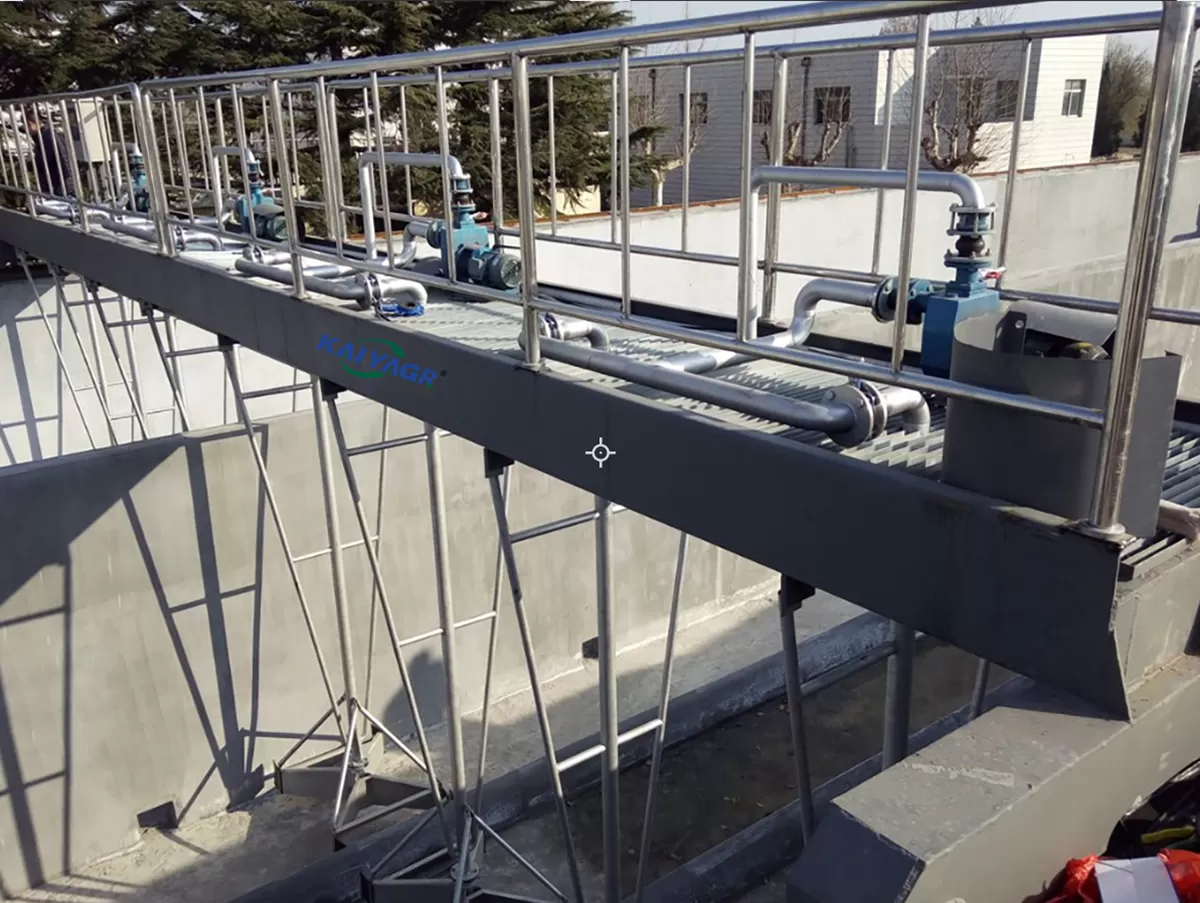
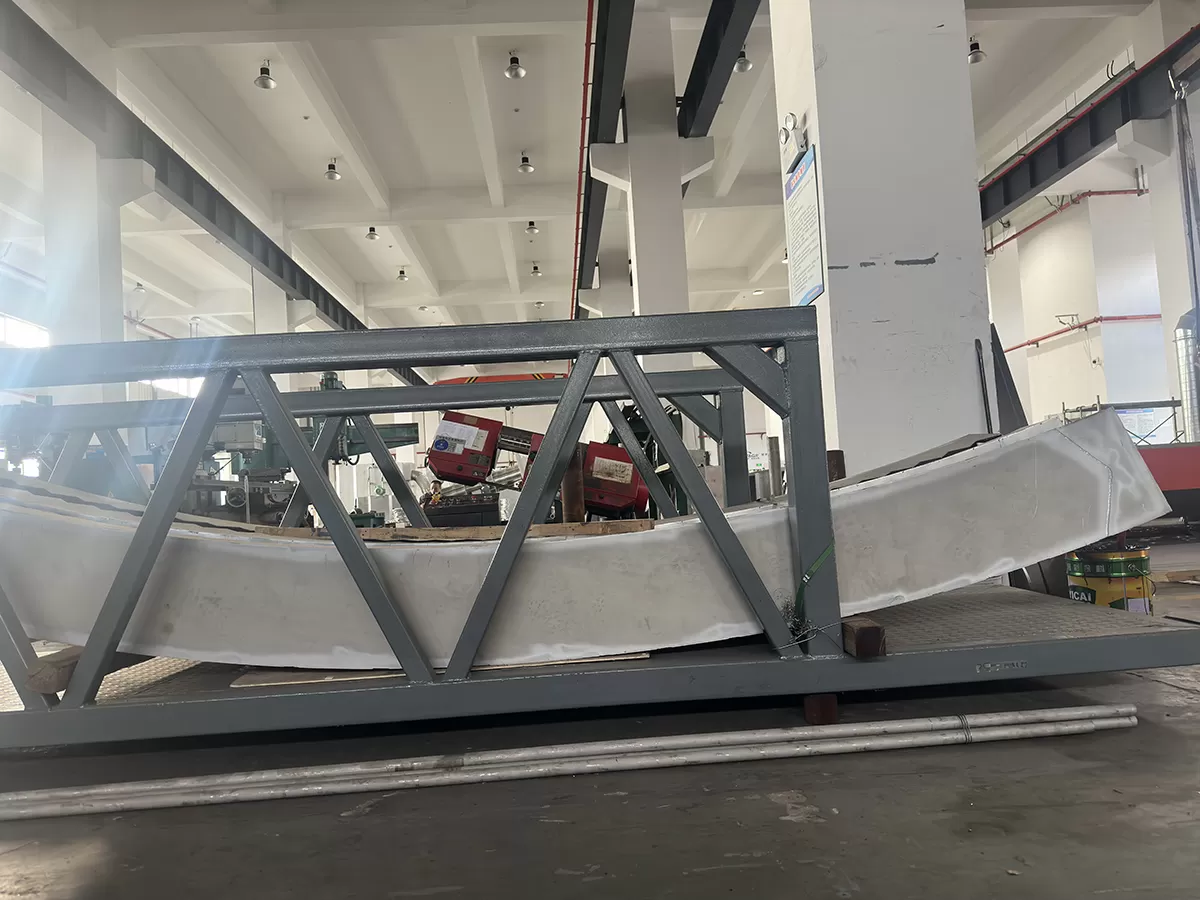
- Gantry Crane-Type Sludge Scraper/Suction Machine: Used in rectangular sedimentation tanks, it uses a gantry crane to travel back and forth along a track along the tank edge, integrating sludge scraping and suction, offering flexible adaptability.
Description
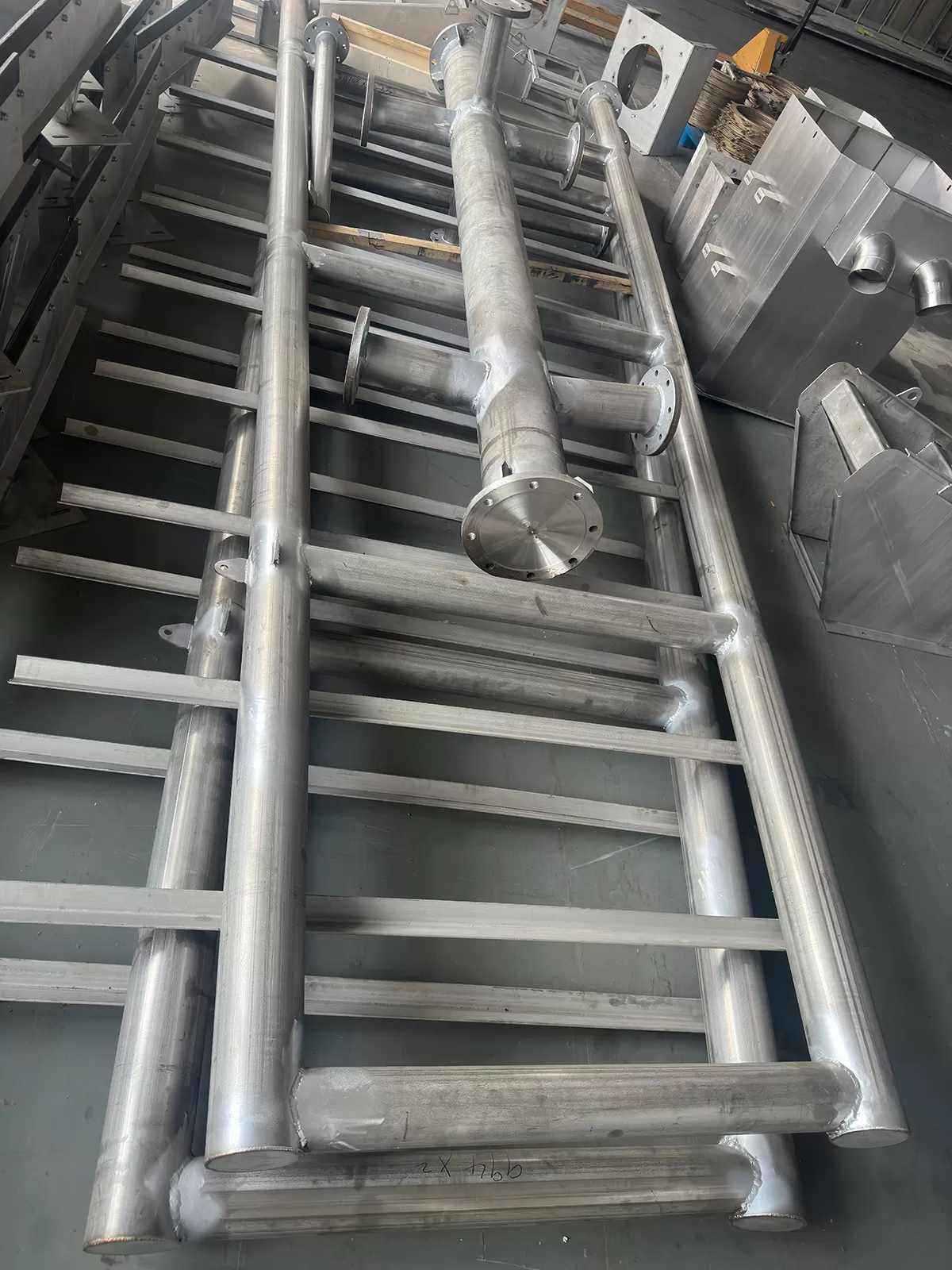
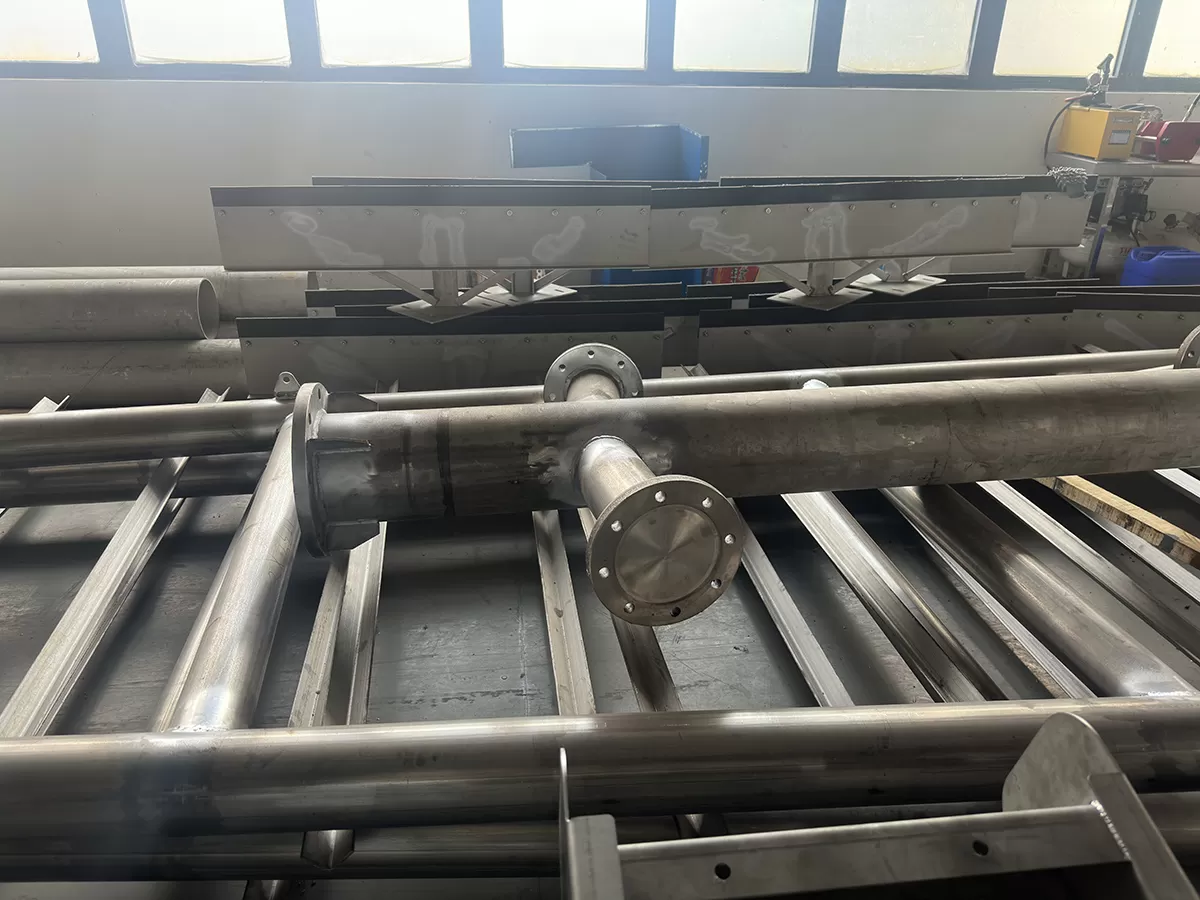
A sludge scraper is a device used for scraping and discharging sludge from sedimentation tanks during wastewater treatment.
Working Principle:
- Peripheral Drive Sludge Scraper: The drive unit rotates the equipment around the sedimentation tank. Water enters through the central cylinder inlet pipe. After sedimentation, the sediment is collected by the scraper blades and drawn to the sludge suction port. The sludge is then sucked into the discharge trough using the water level difference and discharged through a siphon pipe. Simultaneously, scum is collected by the scraper blades and discharged through the scum hopper.
- Traveling Sludge Scraper: The scraper rake and scum rake are raised and lowered by a winch mechanism and an electric push rod, respectively. The equipment travels on rails, and the scraper blades scrape the sludge to the pump suction port. The sludge is then pumped in and discharged while the equipment is traveling.
Technical Parameter Table:
Center drive | ||||||||
model | KYZXG-5 | KYZXG-6 | KYZXG-8 | KYZXG-10 | KYZXG-12 | KYZXG-14 | KYZXG-16 | |
Pool diameter Φ(m) | 3.6/ 4/ 4.5 | 6 | 8 | 10 | 12 | 14 | 16 | |
Surrounding pool depth H(m) | 3.5~4.5(Customized according to user requirements) | |||||||
The water depth at the edge of the pool H1(m) | 3.0~4.0(Customized according to user requirements) | |||||||
outer edge linear velocity V(m/min) | 1.5~3.0 | |||||||
Motor power N(KW) | 0.37 | 0.55 | 0.75 | |||||
Installation dimensions(mm) | B | 1050 | 1250 | |||||
Φ1 | 1000 | 1200 | ||||||
Φ2 | 500 | 800 | ||||||
H2 | 700 | 800 | ||||||
Working bridge end face load P2(KN) | 30 | 33 | 36 | 40 | 48 | 55 | 65 | |
Maximum operating torque (N.m) | 19 | 22.5 | 45 | 56 | 67 | 100 | 122 | |
Peripheral transmission | ||||||||
model | KYZBG-14 | KYZBG-16 | KYZBG-18 | KYZBG-20 | KYZBG-22 | KYZBG-24 | KYZBG-26 | |
Pool diameter Φ(m) | 12 | 15 | 18 | 20 | 22 | 24 | 26 | |
Surrounding pool depth H(m) | 3.0~4.5(Customized according to user requirements) | |||||||
The water depth at the edge of the pool H2(m) | 3.0~4.0(Customized according to user requirements) | |||||||
Peripheral linear velocity V(m/min) | 1.8~2.2 | |||||||
Wheel size (mm) | 400×120 | 420×150 | ||||||
motor power N(KW) | 0.37 | 0.55 | ||||||
Installation dimensions(mm) | B | Customized according to user requirements | ||||||
H3 | Customized according to user requirements | |||||||
L | Customized according to user requirements | |||||||
Peripheral wheel pressure P1(KN) | 9 | 11.5 | 15 | 19 | 22 | 25 | 28 | |
Vertical load of central platform P2(KN) | 17 | 23 | 30 | 37 | 82 | 100 | 112 | |
Horizontal load of central platform P3(KN) | 9.5 | 13 | 17 | 22 | 28 | 28 | 30 | |
Truss-type sludge scraper | ||||||||
model | YQG-5 | YQG-6 | YQG-8 | YQG-10 | YQG-12 | YQG-15 | YQG-20 | |
Pool width B(m) | 5 | 6 | 8 | 10 | 12 | 15 | 20 | |
Gauge LK(m) | B+0.3 | |||||||
Pool depth H(m) | 3.0~7.0(Customized according to user requirements) | |||||||
Pool length L(m) | Customized according to user requirements | |||||||
driving speed V(m/min) | 1.0~2.0 | |||||||
Walking motor power N1(KW) | 0.25×2 | 0.37×2 | 0.55×2 | |||||
Steel wheel diameter d(mm) | 250 | |||||||
Rail specifications (kg/m) | 15 | 22 | ||||||
Wheelbase B1(mm) | 1500 | 2200 | 2900 | |||||
Wheel pressure P1(KN) | 15 | 22 | 30 | |||||
Steel wheel horizontal load P2(KN) | 6 | 8 | 10 | |||||
Application areas:
Widely used in sewage treatment plants, waterworks, and industrial wastewater treatment in industries such as steel, metallurgy, and mining, to remove sludge and impurities from the bottom of sedimentation tanks and ensure the smooth progress of subsequent treatment processes.
Related News
With more than 10 precision production lines, we have an excellent technical and design team to provide you with high-quality products with preferential prices.
Privacy Policy
Tel: 400-9926-919
E-mail: zhangshuangandyss@gmail.com
Address: Building 4, Innovation and Entrepreneurship Industrial Park Economic Development Zone, Taizhou City, Jiangsu Province